
🎯 Key Takeaways
- Ashwagandha (Withania somnifera) is a powerful adaptogen used in Ayurveda for over 3,000 years
- Clinical studies show it can reduce cortisol levels by 23-30%, significantly lowering stress
- Benefits include improved sleep quality, enhanced physical performance, and better cognitive function
- Standard dosage is 300-600 mg of root extract daily, taken with meals
- Generally safe for most adults, but not recommended during pregnancy or with certain medications
What Is Ashwagandha?
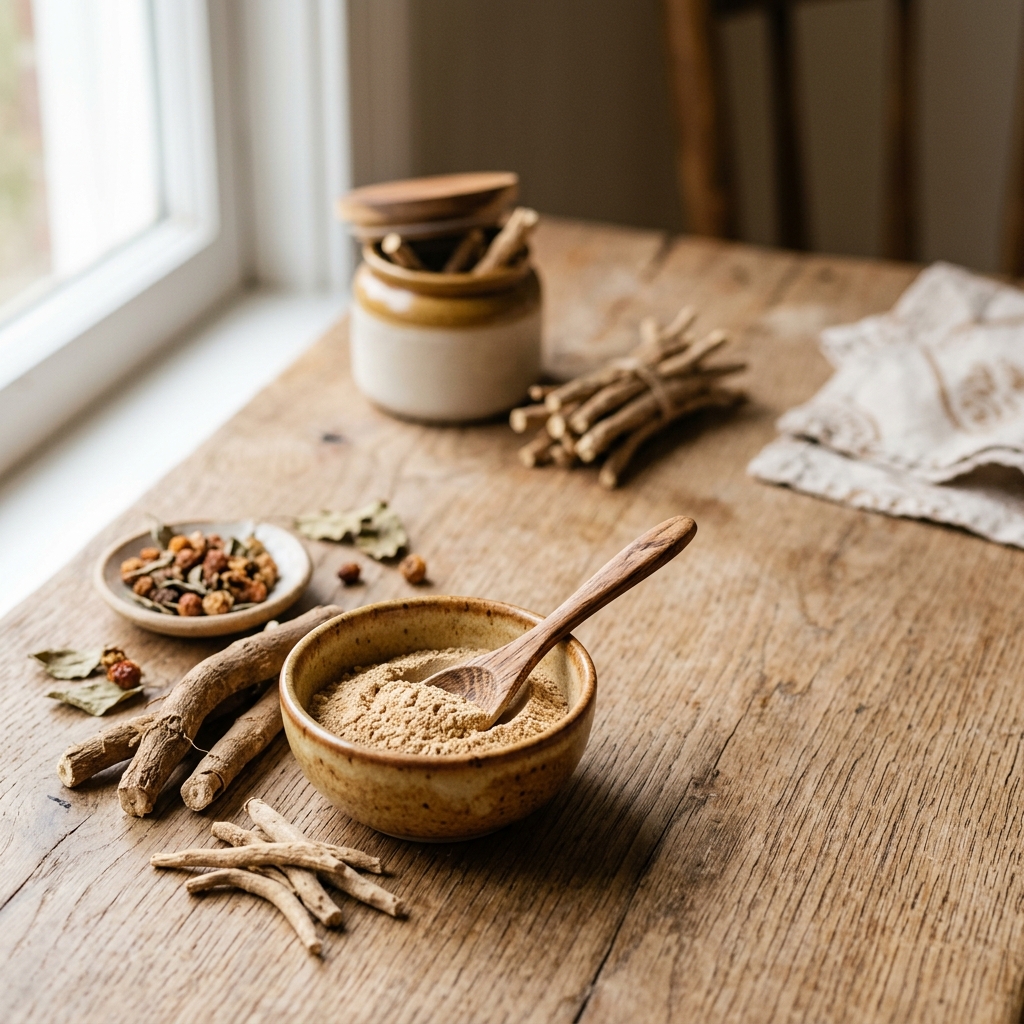
Ashwagandha, botanically known as Withania somnifera, is a small evergreen shrub native to India, the Middle East, and parts of Africa. In Sanskrit, its name translates to "smell of the horse," referring both to the root's distinctive aroma and the belief that consuming it imparts the vitality and strength of a horse.
Classified as a Rasayana (rejuvenating tonic) in Ayurvedic medicine, Ashwagandha has been used for over 3,000 years to promote vitality, relieve stress, improve concentration, and support overall well-being. Modern research has validated many of these traditional uses, making it one of the most extensively studied herbs in the adaptogen category.
An adaptogen is a natural substance that helps the body adapt to physical and emotional stressors by modulating the stress response system. Ashwagandha achieves this primarily through its active compounds called withanolides, which influence cortisol production, neurotransmitter balance, and immune function.
Science-Backed Benefits
Stress and Cortisol Reduction
The most well-documented benefit of Ashwagandha is its ability to reduce stress and anxiety. A landmark 2012 study published in the Indian Journal of Psychological Medicine found that participants taking 600 mg of Ashwagandha root extract daily for 60 days experienced a 27.9% reduction in serum cortisol levels compared to the placebo group.
A 2019 systematic review of five randomized controlled trials confirmed that Ashwagandha supplementation significantly reduced stress and anxiety scores across all studies, with improvements noted as early as 6-8 weeks of consistent use.
Sleep Quality Improvement
The species name "somnifera" means "sleep-inducing" in Latin, and research supports this traditional use. A 2020 meta-analysis found that Ashwagandha significantly improved sleep quality, reduced sleep onset latency (time to fall asleep), and was most beneficial in people with insomnia. The primary active compound triethylene glycol has been identified as the sleep-promoting agent.
Enhanced Physical Performance
Research shows Ashwagandha can improve several aspects of physical fitness. A 2015 study found that healthy men taking 600 mg daily for 8 weeks experienced significant increases in muscle strength and recovery compared to placebo. Another study demonstrated improved cardiorespiratory endurance in elite athletes.
Want to understand how stress impacts your health at a deeper level?
Read About Anxiety and Modern Science →Cognitive Function and Memory
Ashwagandha has shown neuroprotective properties in both preclinical and clinical studies. A 2017 study published in the Journal of Dietary Supplements found that 300 mg of root extract taken twice daily for 8 weeks significantly improved immediate and general memory, attention, and information processing speed compared to placebo.
Immune System Support
Ashwagandha has immunomodulatory effects, meaning it helps balance immune function rather than simply boosting or suppressing it. Research shows it increases the activity of natural killer cells and other immune markers, while also reducing inflammatory markers like C-reactive protein.
Dosage Guidelines
Based on clinical research, the following dosages have shown effectiveness:
- General wellness and stress relief: 300-600 mg of standardized root extract daily
- Sleep improvement: 300 mg taken 1-2 hours before bedtime
- Physical performance: 600 mg daily, split into two doses (morning and evening)
- Cognitive support: 300 mg twice daily with meals
Look for products standardized to contain at least 5% withanolides, as this concentration has been used in most successful clinical trials. KSM-66 and Sensoril are two well-researched branded extracts. Ashwagandha is best absorbed when taken with food, and effects typically become noticeable after 4-8 weeks of consistent use.
🩺 Doctor's Note
While Ashwagandha is generally well-tolerated, it is not appropriate for everyone. Avoid during pregnancy and breastfeeding. Exercise caution if you take thyroid medications (it may increase thyroid hormone levels), immunosuppressants, or sedatives. Always discuss supplementation with your healthcare provider, especially if you have an autoimmune condition or are on prescription medications.
Potential Side Effects
Ashwagandha is considered safe for most adults when used at recommended dosages for up to 3 months. Reported side effects are generally mild and include:
- Mild gastrointestinal discomfort (nausea, diarrhea) - usually resolves with food
- Drowsiness, particularly at higher doses
- Headache in some individuals during the initial days
- Rare cases of liver enzyme elevation with long-term, high-dose use
Explore how traditional Ayurvedic wisdom integrates with modern health practices.
Browse Ayurveda Resources →Traditional Ayurvedic Use
In classical Ayurveda, Ashwagandha is categorized as a Rasayana, a class of herbs that promote longevity, vitality, and resistance to disease. Traditional preparations include Ashwagandha churna (powder mixed with warm milk and honey), Ashwagandha lehyam (herbal paste), and Ashwagandharishtam (fermented herbal liquid).
Ayurvedic practitioners traditionally prescribe it to balance Vata and Kapha doshas, support reproductive health in both men and women, strengthen the musculoskeletal system, and nourish the nervous system. The holistic approach of Ayurveda recognizes that stress relief is not just about reducing cortisol but about restoring balance across all body systems.
⚡ Quick Summary
Ashwagandha is one of the most well-researched adaptogens available, with strong evidence supporting its benefits for stress reduction, sleep improvement, physical performance, and cognitive function. At 300-600 mg daily of standardized extract, it offers a natural, generally safe complement to a healthy lifestyle. Consult your healthcare provider before starting, especially if you take medications or have underlying health conditions.
Sources & References
- Chandrasekhar, K., et al. (2012). "A prospective, randomized double-blind, placebo-controlled study of safety and efficacy of Ashwagandha root extract." Indian Journal of Psychological Medicine, 34(3), 255-262.
- Lopresti, A. L., et al. (2019). "An investigation into the stress-relieving and pharmacological actions of Ashwagandha." Medicine, 98(37), e17186.
- Cheah, K. L., et al. (2021). "Effect of Ashwagandha extract on sleep: A systematic review and meta-analysis." PLoS ONE, 16(9), e0257843.
- Wankhede, S., et al. (2015). "Examining the effect of Withania somnifera supplementation on muscle strength and recovery." Journal of the International Society of Sports Nutrition, 12, 43.